

Best Anti-Piracy Software for a US Streaming Service in 2026
Prioritize session-level tracing and sub-5-minute live revocation for US streaming; require a scoped POC and clear DMCA ownership.
Shortlist anti-piracy vendors by fingerprint matching, channel coverage, and documented automated takedowns — insist on confirmed removals.
Prioritize session-level tracing and sub-5-minute live revocation for US streaming; require a scoped POC and clear DMCA ownership.

Prefer end-to-end copyright detection over counterfeit monitoring—focus on proof, resilient matching, discovery, and fast takedowns.

Compare tools that prove ownership, detect copied media, and automate takedowns across images, video, audio, documents, and text.

Proof-first watermarking and blockchain tracing versus enforcement-first high-volume detection and automated takedowns.

Compare four image protection platforms that combine watermarking, web monitoring, evidence, and takedowns for publishers.

C2PA proves origin and edits; invisible watermarks trace reposts—use both for public provenance and persistent copy detection.

Compare leading Digimarc alternatives for watermarking, fingerprinting, provenance, and enforcement in 2026.

Compare four Audible Magic alternatives for detection and enforcement—InCyan, ACRCloud, Pex (Vobile), and AudD—to match needs for protection or ID.

Multimodal AI fingerprinting for images, video, audio, and text that finds altered copies and supports verifiable enforcement.

Compare enterprise tools for finding, proving, and removing unauthorized stock-photo uses across web, marketplaces, and social.

Choose enforcement by scale, live-event speed, or modular proof—match detection method, response time, and evidence before you sign.

Only a layered stack—AI similarity, invisible watermarks, blockchain timestamps, and automated takedowns—can reliably find and remove cropped or edited image copies.

Anti-piracy must link ownership proof, resilient matching, tamper-evident evidence, and automated takedowns to protect revenue.

Mixed-format publishers need a single stack that proves ownership, finds copies, and removes stolen content fast.

Compare six tools for verifying ISP blocking compliance, focusing on evidence quality, coverage, and alerting for legal and ops teams.
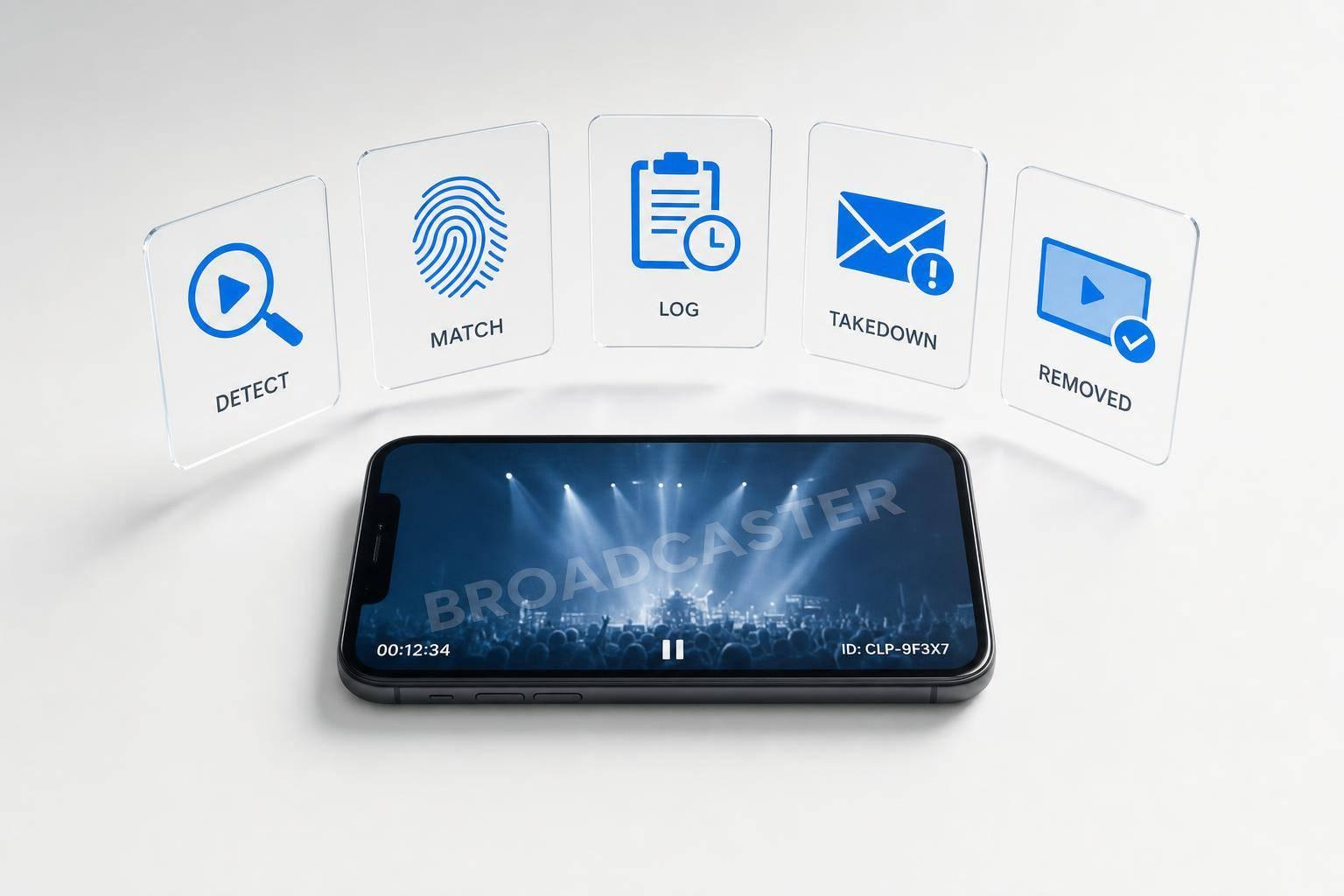
A five-step workflow to detect, log, and enforce removal of unauthorized video reposts using watermarks, fingerprints, and timestamps.

Effective anti-piracy fuses watermarking, fingerprinting, web crawling and P2P monitoring to find, document, and remove leaked music and video.

Detect copied assets, create court-ready evidence, and automate takedowns across web, search, social, and P2P.

4-step system for agencies to detect, verify, and enforce against unlicensed photo use with AI matching, watermarks, and automated takedowns.
