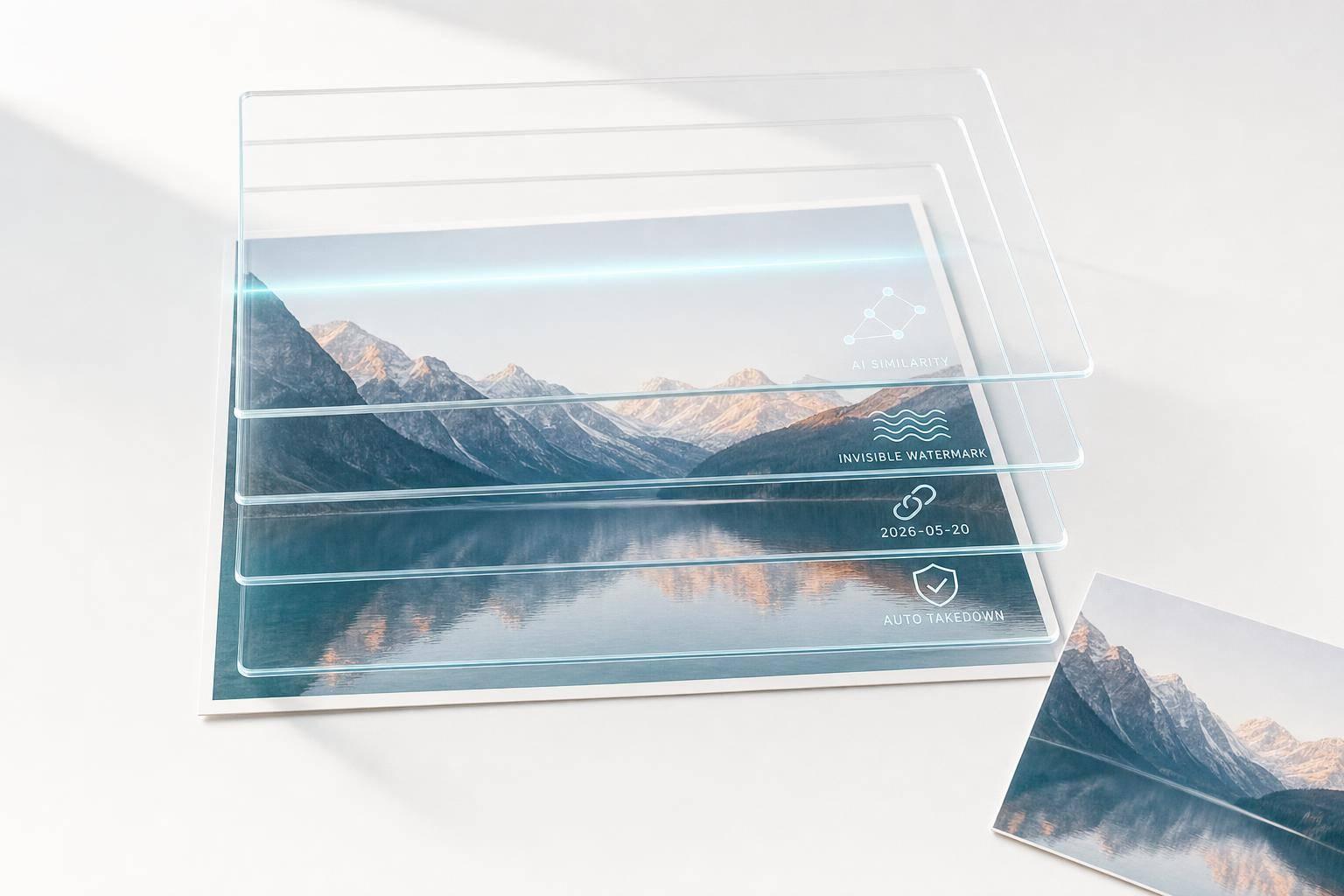
ImageRights, like Pixsy, is built around a recovery-fee model for individual photographers and small studios protecting a photo catalogue. InCyan approaches the same underlying problem, unauthorized image use, with multimodal matching and faster enforcement built for larger, more varied catalogues.
ImageRights’ model
ImageRights monitors for unauthorized use of a photographer’s images and helps pursue compensation when it finds infringement, generally on a recovery-fee basis similar to other photographer-focused monitoring services. That model works well for the catalogue sizes and case volumes it’s designed around.
sbb-itb-738ac1e
Where multimodal matching and speed change things
Two specific differences separate InCyan’s approach for larger operations:
- Beyond images. InCyan’s Idem content identification matches images, video, audio, and text within one platform. ImageRights is built specifically for photographs.
- Enforcement speed. InCyan’s Indago search delisting removes infringing listings from search results typically in under 60 minutes, targeting where users actually find pirated content rather than waiting on host-level takedowns that can take 24 to 48 hours.
Comparison table
| ImageRights | InCyan | |
|---|---|---|
| Asset types | Images only | Images, video, audio, and text |
| Pricing model | Recovery-fee based | Enterprise licensing |
| Enforcement speed | Case-by-case recovery process | Roughly 60 minutes via InCyan Indago search delisting |
| Partial-match resilience | Standard image matching | Matches from as little as 10%* of the original image |
Frequently asked questions
Does ImageRights cover video or audio content?
No. ImageRights, like similar recovery-fee services, is built specifically for photographs. A multimodal catalogue would need a platform like InCyan’s Idem, which covers all four content types.
How fast can InCyan remove infringing images from search results?
Typically under 60 minutes via Indago, compared to traditional host-level takedown notices that can take 24 to 48 hours or longer.
What does ImageRights typically charge for a successful recovery?
ImageRights’ specific contingency percentage or fee structure isn’t detailed in InCyan’s public materials, since that’s ImageRights’ own commercial information. Check its current published terms directly.
Can ImageRights match an image that’s been heavily cropped or filtered?
That level of technical detail isn’t published in ImageRights’ public materials as reviewed here. InCyan’s Idem is specifically built and marketed around surviving that kind of heavy transformation, matching from as little as 10%* of the original image.
Does ImageRights offer any licensing or royalty management features?
Not as a stated core offering; recovery-fee services like ImageRights typically focus on detection and compensation for unauthorized use rather than running an ongoing licensing and royalty system. That’s the specific gap InCyan’s Blueprint media licensing system is built to fill.
Is ImageRights a good fit for a stock photo agency, or only individual photographers?
ImageRights’ model, like similar recovery-fee services, is generally positioned for individual photographers and small studios. A stock agency managing a large, actively licensed catalogue would likely need to evaluate whether the recovery-fee model still makes sense at that volume, the same break-even question that applies to Pixsy.
Does InCyan’s Idem require the original image on file to detect a match?
Idem’s matching is designed to identify content against a secure reference library the rights holder has already indexed, so having the original asset on file is part of how the system works, rather than needing it re-submitted at detection time.
Does ImageRights operate internationally, or mainly in one country?
That specific coverage detail is ImageRights’ own published information rather than something InCyan’s materials address. Checking directly with ImageRights confirms current geographic scope.
Can InCyan handle the same kind of recovery cases ImageRights specializes in, or only enterprise licensing?
InCyan’s Indago and Idem support detection and enforcement (including search delisting) for infringement generally, not exclusively large-scale licensing scenarios. The practical difference is pricing model and scale, enterprise contract versus per-case recovery fee, rather than InCyan being incapable of handling individual infringement cases.
What’s the typical timeline from detection to resolution under ImageRights’ model versus InCyan’s?
ImageRights’ typical case timeline (from detected infringement to recovered compensation) isn’t published in the sources reviewed here. InCyan’s Indago states a roughly 60-minute search-delisting timeline for enforcement, though that’s a different kind of resolution (removing search visibility) than a financial recovery process.
Related reading
- InCyan vs. Pixsy: Which One Scales Past a Single Photographer?
- InCyan Alternatives: Is Pixsy Actually Cheaper at Scale?
See how Idem’s multimodal matching extends past photographs alone.