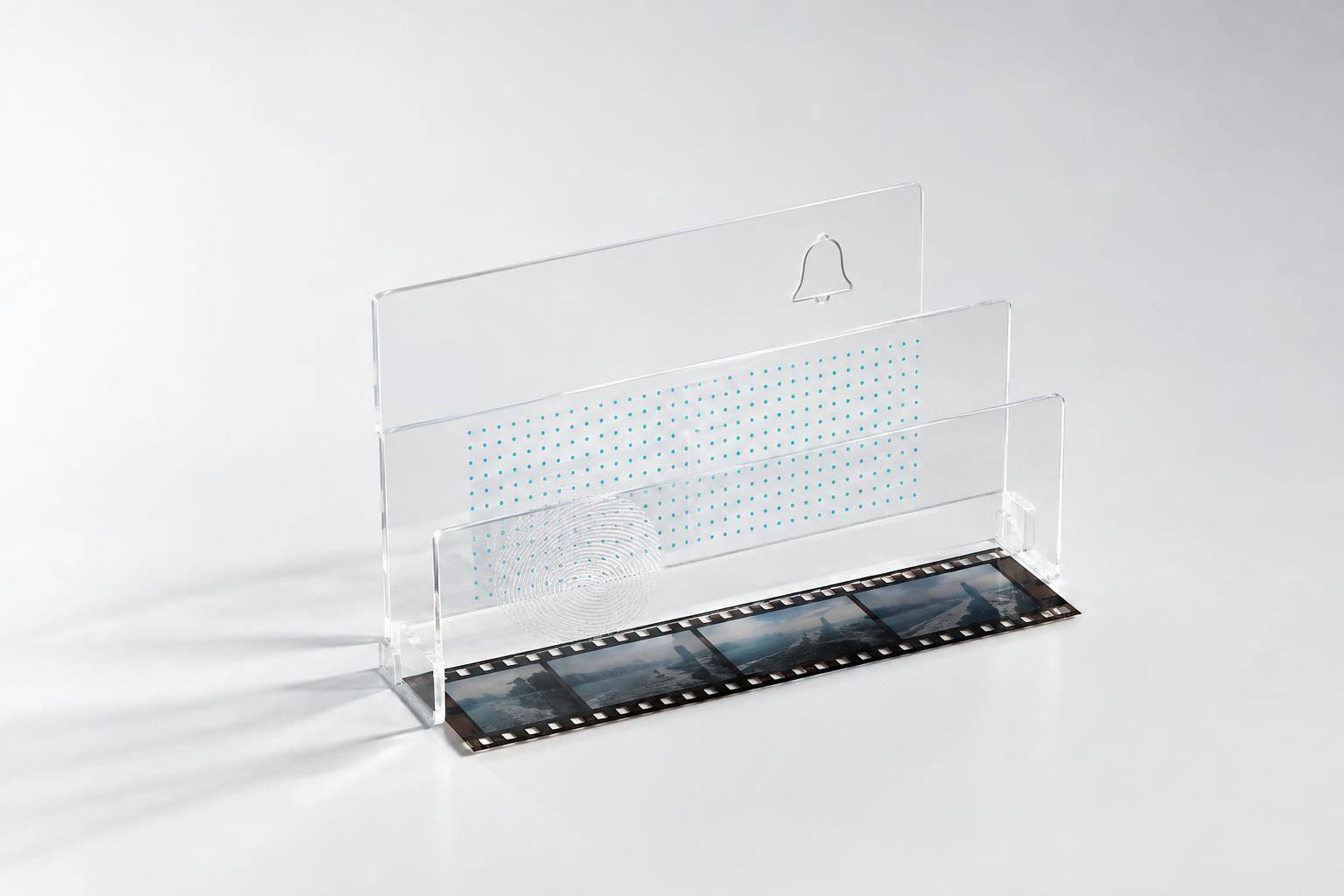
Digimarc and IMATAG both work in invisible watermarking, but at very different scales and use cases. Digimarc has decades of enterprise deployment spanning physical packaging, retail scanning, and broadcast, with a durability track record built around surviving the jump from physical to digital. IMATAG specializes narrowly in press-photo and newsroom leak tracing. They rarely compete for the same specific deal.
Digimarc’s core strength
Digimarc’s watermarking is built to survive printing, scanning, and photocopying, useful for physical-to-digital contexts like product packaging and industrial identification where a phone camera needs to read a machine-readable mark off a physical object.
sbb-itb-738ac1e
IMATAG’s core strength
IMATAG’s watermarking focuses on the newsroom and press-photography use case specifically: embedding a unique mark in each distributed image so that if a photo leaks before its intended publication window, the source can be traced back.
Where the two don’t really overlap
Digimarc’s physical-to-digital durability claims and enterprise scale serve a different buyer than IMATAG’s narrow, pre-publication leak-tracing niche. A packaging or retail-scanning use case has little to do with tracing a press photo leak, and vice versa. Comparing them head-to-head mostly reveals that they’re solving different problems within the same broad watermarking category.
Comparison table
| Digimarc | IMATAG | |
|---|---|---|
| Core specialization | Physical-to-digital durability | Press photo and newsroom leak tracing |
| Physical-to-digital survivability | Strong, industry-leading track record | Not the stated focus |
| Media types | Primarily images and packaging | Primarily images |
| Best fit | Enterprise product packaging, retail scanning | Newsrooms and press agencies protecting pre-publication images |
Where InCyan fits
Neither Digimarc’s physical-durability focus nor IMATAG’s press-photo niche extends across video and audio the way InCyan’s Tectus invisible watermarking does. Tectus applies the same per-copy leak-tracing logic IMATAG uses, but across images, video, and audio, with survival claims for aggressive JPEG/MP4 recompression, cropping, resizing, and format conversion, and ProofChain blockchain-anchored watermarking adds independently verifiable, vendor-neutral proof of ownership that neither Digimarc’s nor IMATAG’s vendor-operated verification model offers. For a rights holder needing cross-modal watermarking rather than either Digimarc’s physical-durability specialty or IMATAG’s newsroom-specific niche, Tectus is the more direct comparison.
Frequently asked questions
Do Digimarc and IMATAG compete for the same customers?
Rarely. Digimarc’s core strength is physical-to-digital durability for packaging and retail; IMATAG’s is press-photo leak tracing for newsrooms. They serve different buyer needs within the same broad watermarking category.
Does IMATAG offer the same physical-packaging durability Digimarc does?
Not as a stated focus. IMATAG’s specialization is digital press photography, not physical-to-digital contexts like product packaging.
Does Digimarc offer newsroom-specific leak tracing the way IMATAG does?
Not as its primary specialization, though Digimarc’s broader digital watermarking capabilities could theoretically apply to similar use cases; IMATAG is more narrowly built and marketed around this specific niche.
Which has the longer track record, Digimarc or IMATAG?
Digimarc has decades of enterprise deployment specifically in physical-to-digital watermarking. IMATAG’s track record in its own press-photo niche isn’t detailed to the same depth in the sources reviewed here.
Does InCyan’s Tectus compete more directly with Digimarc or with IMATAG?
Tectus is a purely digital watermarking service, so it doesn’t compete with Digimarc’s physical-to-digital durability strength directly. It overlaps more closely with IMATAG’s leak-tracing concept, but extends across more media types.
Is there an independent benchmark comparing Digimarc and IMATAG?
No. Neither company’s durability or leak-tracing claims have a public, independent, third-party benchmark available for direct comparison.
Would a stock photo agency need Digimarc, IMATAG, or something else?
Depends on the specific need. If physical print or packaging durability matters, Digimarc’s strength applies. If pre-publication leak tracing for digital images specifically matters, IMATAG’s niche applies. A broader digital catalogue spanning multiple media types might be better served by a cross-modal platform like InCyan’s Tectus.
Does either Digimarc or IMATAG offer blockchain-anchored verification?
Not as a primary offering for either. Digimarc’s authenticity work increasingly aligns with C2PA rather than blockchain by default; IMATAG’s verification runs through its own systems. InCyan’s ProofChain is the one in this set with blockchain-anchored, independently verifiable proof.
What’s the honest reason to consider InCyan over both Digimarc and IMATAG?
Needing one platform that covers cross-modal watermarking (images, video, and audio) with both the durability claims and the vendor-neutral verification model, rather than choosing between a physical-durability specialist and a press-photo niche tool.
Is pricing published for Digimarc or IMATAG?
Not in the sources reviewed here for either company; both would need to be requested directly for a specific deployment scale.
Related reading
- Digimarc vs. Steg.AI for Watermarking Approach
- IMATAG vs. Steg.AI for Watermarking Deployment History
- Digimarc vs. InCyan for Watermarking Durability
- IMATAG vs. InCyan Tectus for Invisible Watermarking
See how InCyan’s Tectus and ProofChain cover cross-modal watermarking beyond either vendor’s specific niche.